The Neuropsychology Group investigates how the human brain adapts and recovers from neurological injury, particularly stroke, with a focus on neuroplasticity and how it can be enhanced through targeted interventions. Our research bridges studies in healthy and patient populations to deepen the understanding of neuroplastic mechanisms underlying cognitive and sensory functions. We aim to translate these insights into personalized treatments, working closely with physicians and therapists at clinical partners to ensure direct clinical application.
We seek to identify brain network changes associated with functional recovery after brain injury and to develop prognostic markers that inform clinical decision-making in neurorehabilitation. By integrating precision brain mapping and advanced machine learning, we aim to create personalized brain markers tailored to each patient’s unique injury and recovery trajectory. Building on these insights, we test neuromodulatory interventions – including psychedelics and nutrition supplements – to actively promote brain plasticity.
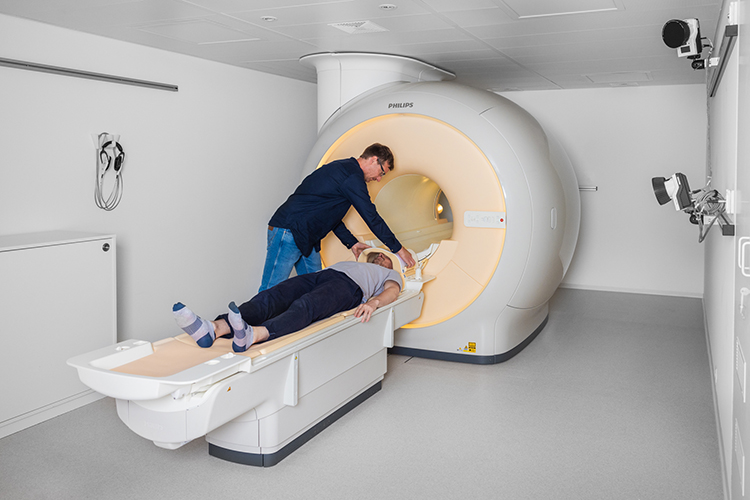
The lab is equipped with a Philips MR 7700 3T MRI scanner, enabling comprehensive assessment of the brain across functional, anatomical, and neurochemical domains. Our interdisciplinary team advances neuroimaging by developing novel MRI-compatible devices, integrating virtual reality for naturalistic experimental MRI paradigms, and optimizing specialized imaging sequences.
Research Axes
Other Research Groups
LLUI currently has three more core axes of research. Find an overview of all research groups and their individual research by clicking below